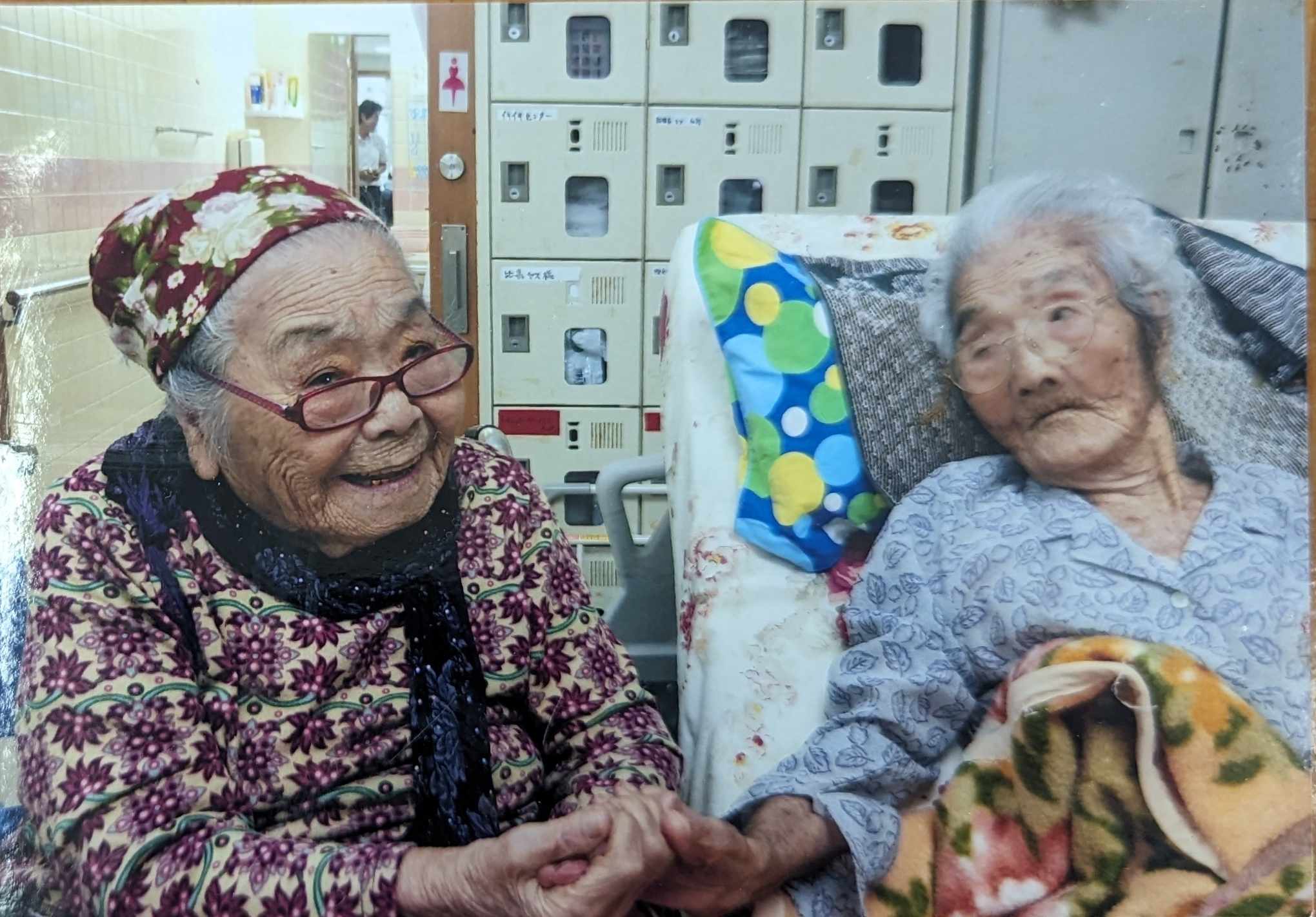
As I have previously noted, most alleged biohacking or life extension strategies appear fruitless and may instead serve the purpose of enriching the seller since some people are willing to pay a hefty price for the chance to live longer. Still, although we have yet to reach longevity escape velocity (LEV), research is ongoing and some studies on different drugs show promising results for minor life extension. Semaglutide, which has been a hot topic for a few years now due to its effect on reducing hunger and leading to weight loss, has been demonstrated to affect all-cause mortality, including cardiovascular disease. Escaping chronic disease could lead to an increase in average lifespan as a large proportion of people reaching old age will eventually develop some form of chronic morbidity. As Gruenberg (1977) posited decades ago: the increase in chronic morbidity is “The Failure of Success.” Few people die from infectious disease, resulting in chronic disease becoming ubiquitous.
This editorial discusses the rise in chronic morbidity in the centenarians and how the future might look like for this population group. The editorial is partially inspired by my master’s thesis in gerontology from a few years back and a recent publication that I co-authored with researchers at the Karolinska Institutet and Jönköping University.
Demographic and epidemiologic transitions
The average lifespan in most countries is increasing, which is mainly attributable to an increasing number of older adults (ageing from above). Birth numbers in most countries are stable or decreasing (ageing from below), causing the population pyramids to become either population squares or top heavy. The principal drivers of the demographic transition have been decreased infant mortality and that people surviving longer from disease, compared to in the past.
Within the demographic transition, an epidemiologic transition is occurring. Scholars have described three stages that will happen (Omran, 1971; McKeown, 2009):
- The age of pestilence and famine – a period where there is a high mortality that varies depending on season and period. The most common causes of death stem from infectious or parasitic disease. Life expectancy at birth is around 40 years. Think Medieval times up until the 1700/1800s.
- The age of receding pandemics – Public health efforts (sanitation, health care, health literacy) lead to decreases in mortality. Life expectancy hits 55. The population is now growing rapidly. Industrial revolution until mid/late-1900s.
- The age of degenerative and man-made disease – Few people die at young ages, infant mortality is rare as infectious disease becomes uncommon. Instead, chronic disease (age- or lifestyle-related) is frequent. Life expectancy at birth is over 70 years. Some (Mercer et al., 2018) argue that an even later stage occurs where medical and public health advances help delay chronic disease until late in life, driving life expectancy up above 80. The population is ageing. Modern age.
Given our large planet where countries are at different stages of development and varying living conditions, some countries remain in the earlier stages of these transitions while others are in the latter. What can be noted is that we will still die. Mortality that previously stemmed from external pathogens now stem from our own way of life or from the body ageing beyond repair.
Morbidity and the increased lifespan
The most common causes of death in people aged 65 and above are various forms of cancer and cardiovascular disease, which account for about half of all deaths in countries such as Sweden (Swedish Board of Health and Welfare, 2025). With an ageing population, where the average lifespan has increased, theories have been proposed to answer how the population will live with the extra years added to their lifespan (Fries, 1980; Gruenberg, 1977; Kramer, 1980; Manton, 1982).
- Compression of morbidity – With an increased life expectancy, the proportion of the life lived with chronic illness and disability will decrease. Morbidity will be compressed towards the final years of life. Longevity is a result of people avoiding chronic disease until very late in life. Leads to lower health care expenses.
- Expansion of morbidity – As life expectancy increases, people will live more years with chronic disease. Morbidity is expanded for a longer period of time. The increased longevity stems from people surviving longer with chronic disease. Higher health care expenses.
- Dynamic equilibrium – As life expectancy increases the number of years lived with chronic morbidity will remain consistent but occur later in life. Health care expenses remain consistent.

Figure 1. Potential changes in morbidity with an increased life expectancy (Lindberg, 2023. Adapted from Sundberg, 2021).
Centenarian morbidity
Centenarian research has indicated that a compression of morbidity occurs (Ismail et al., 2016) while research on other population groups and settings indicates an expansion (Rashmi & Mohanty, 2023) or both occurring simultaneously (Zhang et al., 2022). My own thesis on centenarians in Sweden discussed that both compression and expansion of morbidity could be occurring (Lindberg, 2023).
My thesis was later reworked to a paper (Lindberg et al., 2025) that focused on the centenarian population in Sweden from 1990-2022. First, the number of centenarians turning 100 increased from about 300 in 1990 to about 1,500 in 2022. The proportion of centenarians who experienced polypharmacy (more than 5 prescribed drugs) increased from 60 percent in 2006 to close t0 80 percent of centenarians experiencing polypharmacy in 2022. Likewise, the proportion of centenarians with no prescribed drugs decreased from about 10 percent to 5 percent. The prevalence and average number of chronic diseases diagnosed in the centenarians experienced a similar increase, with cardiovascular disease, cancer and cataracts being the most common. Simultaneously, the proportion of centenarians receiving no home care or residential care increased from about 20 percent in men and 15 percent in women to 30 percent and 25 percent, respectively.
The results from that study therefore indicated that the health status of centenarians had worsened in relation to chronic disease and polypharmacy while more centenarians were able to receive no care. These results could highlight both expansion and compression in morbidity in the centenarian population. To note is that there could be incentives to prescribe more drugs and that chronic disease may be diagnosed with higher accuracy/rates now than in the past (diagnostic drift), potentially inflating the observed findings.
Future centenarian health
The number of centenarians is increasing world-wide. Estimates indicate that globally, about 600,000 people are aged 100 and above with a potential increase to 3.7 million by the year 2050 (United Nations, 2022). The above described study and other centenarian research (e.g., Zhang et al., 2025a, 2025b) indicate that while centenarians are still a highly select group that avoid morbidity until later in life compared to their shorter-lived peers, they do not always avoid chronic disease. Zhang et al. (2025a) did note that the lifetime risk of chronic disease was lower in centenarians compared to shorter-lived individuals, which could challenge that an increased lifespan leads to more chronic disease.
With an increasing number of centenarians that could stem from people surviving longer with mild chronic disease the health may be affected. An increase in drug use or chronic morbidity could increase risks of incidents such as falls or drug-drug-interactions that can affect the quality of life for the group of the oldest old. An impacted health status could in turn necessitate more health care consumption, potentially causing a strain on extant health care resources. I did, however, note that research is somewhat inconclusive, even when studying the centenarian population only in Sweden.
Still, even with more centenarians, they will still be mortal. Mortality in centenarians is close to 50 percent annually, meaning that few will become supercentenarians although with more centenarians the number of supercentenarians could potentially increase. With increased longevity, some system within the person will eventually cease to function be that an increased susceptibility to infection, a failing cardiovascular system or cancer.
Curing old age remains distant but more people will live longer and the population will continue ageing, which could be considered a success. What their health will be remains uncertain. An expansion of morbidity could have severe consequences on health and care systems, draining resources while a compression of morbidity could have positive effects on said systems. What is likely is that both compression and expansion of morbidity will occur in the population over time.
References
Fries, J. F. (1980). Aging, natural death, and the compression of morbidity. New England Journal of Medicine, 303(3), 130–135.
Gruenberg, E. M. (1977). The failure of success. Milbank Quarterly, 55, 3-24.
Ismail, K., Nussbaum, L., Sebastiani, P., Andersen, S., Perls, T., Barzilai, N., & Milman, S. (2016). Compression of Morbidity is Observed Across Cohorts with Exceptional Longevity. Journal of the American Geriatrics Society, 64(8), 1583-1591. https://doi.org/10.1111%2Fjgs.14222
Kramer, M., (1980). The rising pandemic of mental disorders and associated chronic diseases and disabilities. Acta Psychiatrica Scandinavica, 62(S285), 382–397.
Lindberg, J. (2023). Health status and drug use in Swedish Centenarians [Master’s thesis]. Jönköping University.
Lindberg, J., Zhang, Y., Murata, S., Kåreholt, I., & Modig, K. (2025). Swedish centenarian health – a nationwide, observational study on care utilization, drug use, morbidity, and mortality among Swedish centenarians in 1990 to 2022. BMC Geriatrics, 25, 1011. https://doi.org/10.1186/s12877-025-06798-5
Manton, K.G. (1982). Changing concepts of morbidity and mortality in the elderly population. Milbank Memorial Fund Quarterly, 60(2), 183–244.
McKeown, R. E. (2009). The Epidemiologic Transition: Changing Patterns of Mortality and Population Dynamics, American Journal of Lifestyle Medicine, 1(3), 19S-26S. https://doi.org/10.1177%2F1559827609335350
Mercer, A. (2018). Updating the epidemiological transition model. Epidemiology & Infection, 146(6), 680-687. https://doi.org/10.1017/S0950268818000572
Omran, A. R. (1971). The Epidemiologic Transition: A Theory of the Epidemiology of Population Change. The Milbank Memorial Fund Quarterly, 4(1), 509-538. https://doi.org/10.2307/3349375
Rashmi, R., & Mohanty, S. K. (2023). Examining chronic disease onset across varying age groups of Indian adults using competing risk analysis. Scientific Reports, 13, 5848. https://doi.org/10.1038/s41598-023-32861-5
Sundberg, L. (2021). Better All the Time? Trends in Health and Longevity Among Older Adults in Sweden [Doctoral dissertation]. Karolinska Institutet.
Swedish Board of Health and Welfare. (2025). Statistik om dödsorsaker år 2024. Socialstyrelsen: Stockholm. https://www.socialstyrelsen.se/contentassets/53d951607fb1421382954e156700a206/2025-9-9775.pdf
United Nations Department of Economic and Social Affairs. (2022). World Population Prospects 2022: Summary of Results. United Nations. https://www.un.org/development/desa/pd/sites/www.un.org.development.desa.pd/files/wpp2022_summary_of_results.pdf
Zhang, Z., Dong, J., Zhao, C., & Li, Q. (2022). Trends of Healthy Life Expectancy of the Elderly in China in 1994–2015: Revisiting From the Perspective of Morbidity Transition. Frontiers in Public Health, 9, 774205. https://doi.org/10.3389/fpubh.2021.774205
Zhang, Y., Murata, S., Schmidt-Mende, K., Ebeling, M., & Modig, K. (2025a). Do people reach 100 by surviving, delaying, or avoiding diseases? A life course comparison of centenarians and non-centenarians from the same birth cohorts. GeroScience, 47(3), 3539–3549. https://doi.org/10.1007/s11357-024-01330-w
Zhang, Y., Murata, S., Schmidt-Mende, K., Ebeling, M., & Modig, K. (2025b). Disease accumulation and distribution across the lifespan in Swedish centenarians and non-centenarians: a nationwide life course comparison of longevity and health resilience. EClinicalMedicine, 87, 103396. https://doi.org/10.1016/j.eclinm.2025.103396