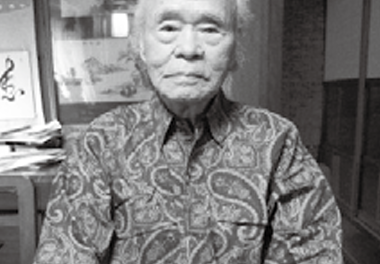
Hikaru Katō (Japanese: 加藤光) is a Japanese supercentenarian who is currently the oldest living man in Japan.
Spanish Woman María Pérez Llanos Turns 111



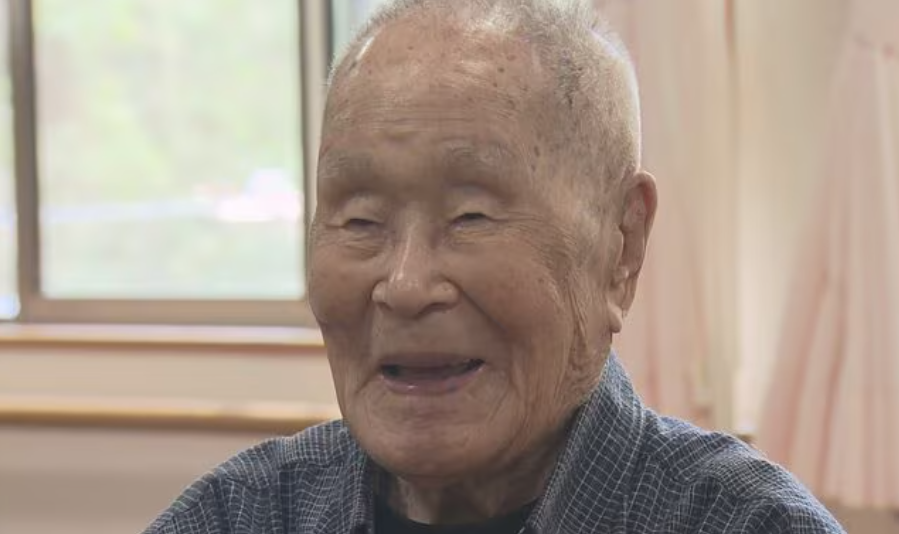
Photographed in September 2025 at the age of 111. (Source: RKK.jp)
✔ Age Certified by LongeviQuest
Loading...
Hikaru Katō (Japanese: 加藤光) is a Japanese supercentenarian who is currently the oldest living man in Japan.
Hikaru Katō was born on 2 May 1914, in Yamaga City, Kumamoto Prefecture, Japan. After joining the Ministry of Agriculture and Forestry, he was drafted at the age of 24, just a year before World War II began, and was initially deployed to Taiwan. Four days after the war started, he landed in the Philippines, where he encountered American forces and sustained an injury to his right leg. Though he prepared himself for the possibility of death, he held faith in a Japanese victory. Later, he was stationed on the Indonesian island of Timor, where he ultimately learned of Japan’s defeat. When Australian forces invaded the island, Katō and his fellow Japanese soldiers were disarmed, handing over their rifles and ammunition. As a prisoner of war, he faced uncertainty but managed to sustain himself and others by growing sweet potatoes and vegetables on the island. Nine months after the war’s end, he returned to Japan in May 1946.
Upon his return, Katō resumed work as a clerk at the Ministry of Agriculture, Forestry and Fisheries, contributing to Japan’s post-war agricultural recovery. He served in the Ministry until his retirement at the age of 59.
In 1968, Katō was honored for his 30 years of service. After retiring in 1973, he continued contributing to his community by teaching pottery classes at a city-run Elderly Living Workshop, a hobby he enjoyed well into his mid-90s. He also devoted time to writing, completing his autobiography and regularly submitting letters about his war experiences to local newspapers in Kumamoto until he was 109 years old, each time expressing his hope that war would never happen again.
Until 2023, Katō lived at his home in Kumamoto City. As of September 2025, he resides in a nursing home in Yamaga City, Kumamoto Prefecture.
At the age of 111, he still walks with his back straight and eats meals independently. He attributes his vitality to eating a wide variety of foods, saying, “It is important not to be picky and to eat everything that is served.” He is also able to handle most of his daily activities, including changing clothes, brushing his teeth, bathing, and using the toilet on his own, and he makes exercise a part of his daily routine.
He has said, “I don’t have a goal, but I think only about how to live the rest of my life with enjoyment.” He also values honesty and gratitude, believing that “it is important not to tell lies and to always give heartfelt thanks for the kindness of others.”
At some point prior to September 2023, he became the oldest living man in Kumamoto Prefecture. It’s possible he assumed the title following the passing of Akio Hirae (平江秋雄; 12 March 1914 – c.4 August 2023).
His age was verified by Japan’s Ministry of Health, Labour, and Welfare (MHLW), as well as Yumi Yamamoto, Ryohei Asano, and Marco Wikkerink, and validated by LongeviQuest on 16 November 2024.
In September 2025, he was reported as the third-oldest living person in Kumamoto Prefecture, after Miho Matsuzaki and Setsu Sugahara.
On 8 February 2026, following the passing of 111-year-old Kiyotaka Mizuno, he became the Oldest Living Man in Japan, at the age of 111 years, 282 days.
* “Staff directory (as of March 31, 1966)” – MAFF Kyushu AES Annual Report, Published in 1968
* “Long Service Award (30 years)” – MAFF Kyushu AES Annual Report, Published in 1970
* “Staff directory (as of March 31, 1971)” – MAFF Kyushu AES Annual Report, Published in 1972
* “伝えたい私の戦争 「殺し合い」に死を覚悟” – Kumamoto Nichinichi Shimbun, 6 June 2013
* “伝えたい私の戦争 武装解除「むなしすぎた」” – Kumamoto Nichinichi Shimbun, 7 June 2013
* “同じ日二度と来ないで 加藤光さん(101)=熊本市西区 陸軍第48師団” – Kumamoto Nichinichi Shimbun, 8 December 2015
* “戦場で涙した母からの手紙(加藤光、109、無職、熊本市)” – Kumamoto Nichinichi Shimbun, 10 May 2023
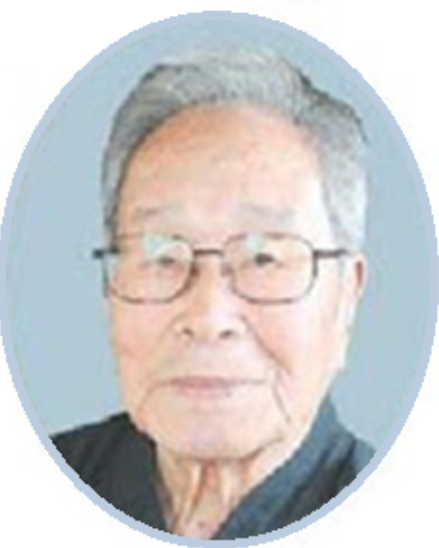
At the age 99. (Source: Kumamoto Nichinichi Shimbun)
[crp limit=’4′ ]