At 111 years old, Tsuru Yamamoto (山本つる) lives with her daughter in Yamato, Kanagawa Prefecture, Japan. Although she now lives in Kanagawa, she remains the oldest registered resident of Ōta Ward, Tokyo.
She attends an adult day care center twice a week and receives home rehabilitation twice a week. She folds her own laundry and enjoys reading monthly magazines, classical Japanese poetry collections such as the Man’yōshū and the Kokin Wakashū, books on calligraphy, and watching television.
LongeviQuest recently spoke with her family about her life and the many experiences that have filled it over the past 111 years.
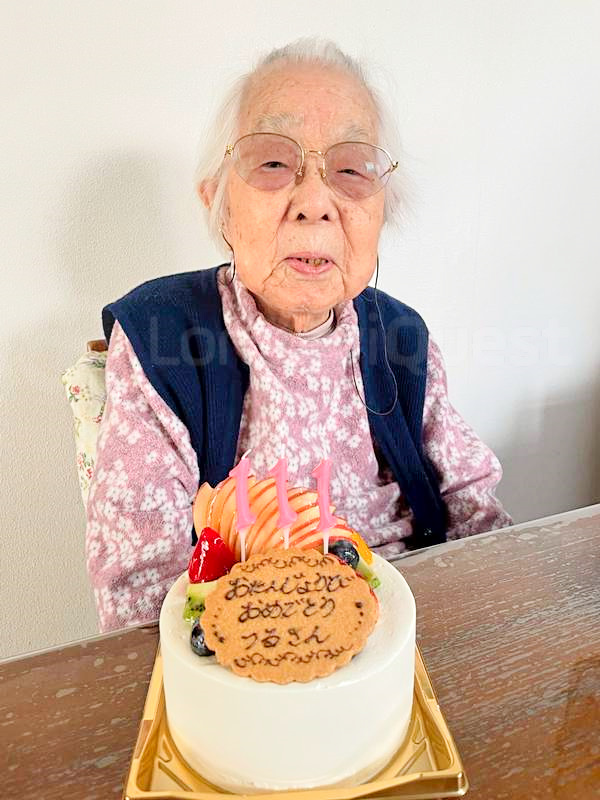
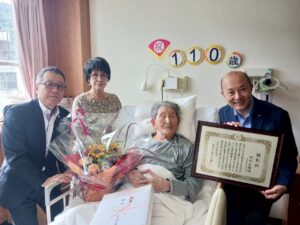
Tsuru Yamamoto on her 111th birthday in March 2026. (Courtesy of Tsuru Yamamoto’s family)
Surviving the Great Kantō Earthquake and World War II
Tsuru Yamamoto (山本つる) was born on 25 March 1915 in Honjo, Tokyo City, Tokyo Prefecture (present-day Sumida City, Tokyo). Her father owned a movie theater in Asakusa, one of Tokyo’s traditional downtown districts.
She had an older brother, an older sister, and a younger sister. Longevity also runs in her family, as her younger sister, Umeko Kanamori, later became the oldest living resident of Nagareyama, Chiba Prefecture, and lived to the age of 107.
When the Great Kantō Earthquake struck on 1 September 1923, Tsuru was eight years old. Near her home stood the former Army Clothing Depot in Honjo, where tens of thousands of people sought refuge. While many people fled there, her grandfather judged the direction of the wind and urged the family to head toward Chiba instead. His decision saved their lives, as the depot became the site of one of the disaster’s deadliest fire whirls, claiming approximately 38,000 lives.
The family spent a short time in Chiba before returning to Tokyo.
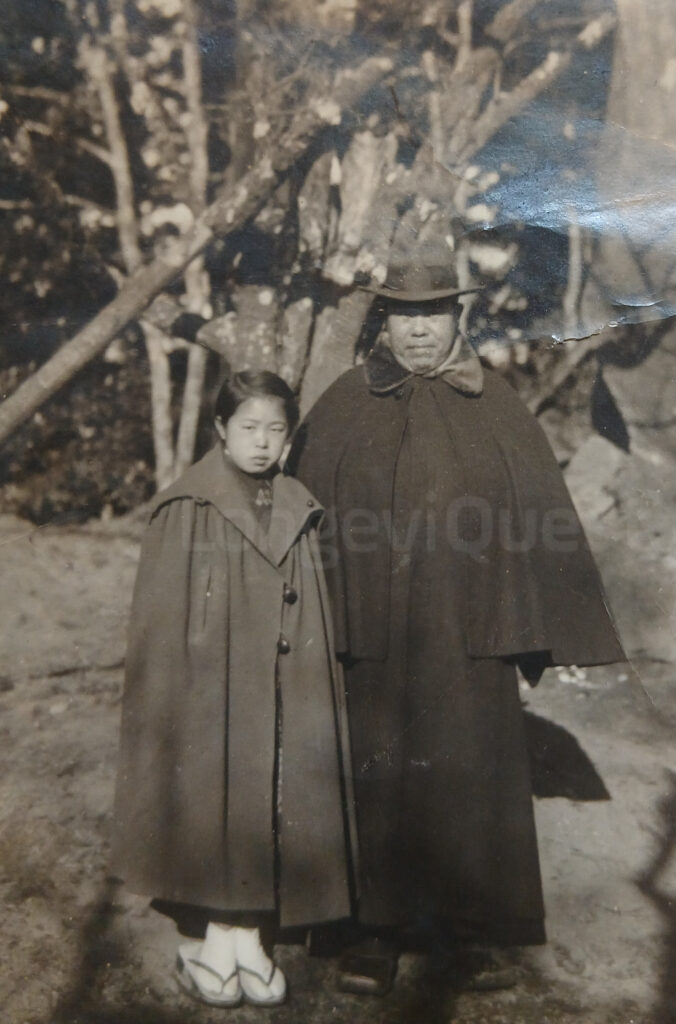
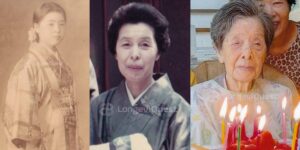
Tsuru with her father at Naritasan Shinshō-ji, Tokyo, at the age of 9. (Courtesy of Tsuru Yamamoto’s family)
After graduating from elementary school, Tsuru enrolled at Ōtsuma Girls’ High School (now Ōtsuma Junior and Senior High School). During her school years, she was known for her athletic ability and was selected to give demonstration performances in gymnastics and dance, something she remained proud of even later in life.
When Tsuru was in elementary school, her older brother became a Christian and began taking her to church every Sunday. She was later baptized and became a Christian herself. She later worked alongside her younger sister at a church-operated nursery school.
Following the Great Tokyo Air Raid of 10 March 1945, Tsuru joined other members of her church in helping at a nursery school and a home for mothers and children in heavily damaged Honjo. Walking through the burned-out city, she witnessed countless charred bodies. She later helped lead 13 mothers and children who had survived at the nursery school back to Koiwa. In a commemorative publication marking the 50th anniversary of Koiwa Church, Tsuru looked back on that experience, writing that, at the time, she had felt, “God never gives us more than we can bear.”
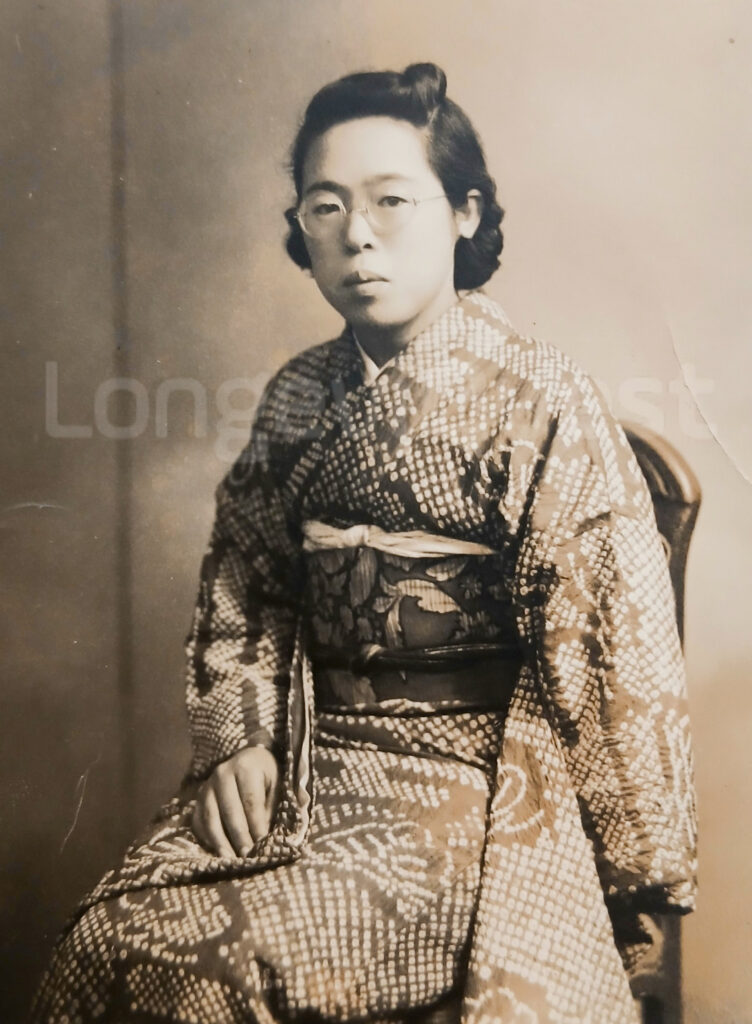
Tsuru at around the age of 20. (Courtesy of Tsuru Yamamoto’s family)
Always Open to Trying Something New
After the war, Tsuru was introduced by her pastor to a high school teacher, whom she later married in an arranged marriage. Together they raised two sons and a daughter.
Wanting to keep her husband and children healthy, she attended cooking classes, where she learned to prepare Western-style dishes such as gratin—still uncommon in many Japanese households at the time—and enjoyed serving them to her family.
Her interests extended well beyond cooking. She enjoyed cycling, swimming, dressmaking, leathercraft, knitting, calligraphy, and haiga, a traditional Japanese art form that combines haiku with ink painting.
At her husband’s encouragement, she began studying calligraphy, which soon became one of her favorite pursuits. As her skills grew, she began teaching neighborhood children and continued holding classes until her eighties.
She continued taking the train to attend haiga classes until her nineties. Some of her classmates were around 30 years younger than she was. She enjoyed having lunch with them and traveling together, and her family believes these friendships with younger people may have contributed to her youthful outlook on life.
She also enjoyed traveling. Until around her seventies, she visited five or six European countries, as well as Taiwan and Southeast Asia, with friends.
In her nineties, Tsuru was diagnosed with colorectal cancer. She began rehabilitation the day after surgery and recovered well.
With the support of her family, she continued living independently in Tokyo until the age of 105 before moving in with her daughter in Yamato, where she continues to live today.
Giving Back Through Art
Following the Great East Japan Earthquake in 2011, Tsuru wanted to do something to help those affected by the disaster. The following year, she had 300 calendars featuring her own haiga works printed and sent them to people affected by the disaster in Sukagawa, Fukushima Prefecture.
Remembering her own experience of surviving the Great Kantō Earthquake at the age of eight, as well as evacuating to Sukagawa after the Great Tokyo Air Raid, she wanted to do what she could for those facing another devastating disaster.
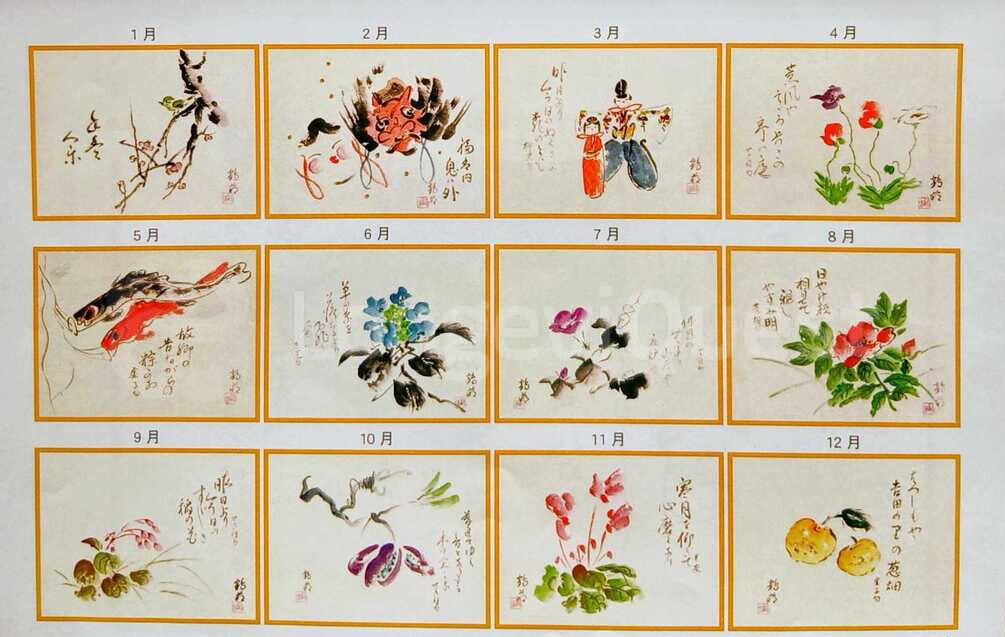
The cover of a calendar featuring Tsuru Yamamoto’s haiga artwork. (Courtesy of Tsuru Yamamoto’s family)
Enjoying Life Every Day
Today, Tsuru lives with her daughter in Yamato, Kanagawa Prefecture. She attends an adult day care center twice a week and receives home rehabilitation twice a week.
She folds her own laundry and enjoys reading monthly magazines, classical Japanese poetry collections such as the Man’yōshū and the Kokin Wakashū, and books on calligraphy. She also enjoys watching television.
Her favorite food is sushi. She especially enjoys tuna sashimi about twice a week and is also fond of grilled eel.
When Shohei Ohtani of the Los Angeles Dodgers appears on television, Tsuru smiles and says, “He seems like such a nice young man.”
She also takes an annual hot spring trip with her family. At the age of 111, she will visit Hakone with them.
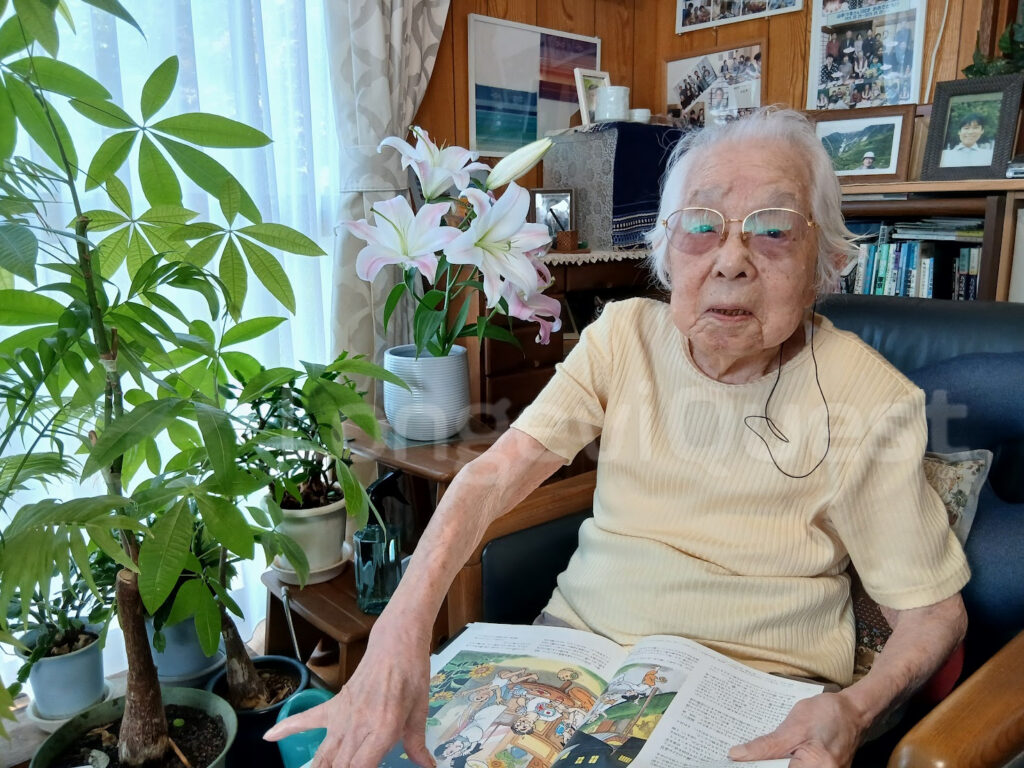
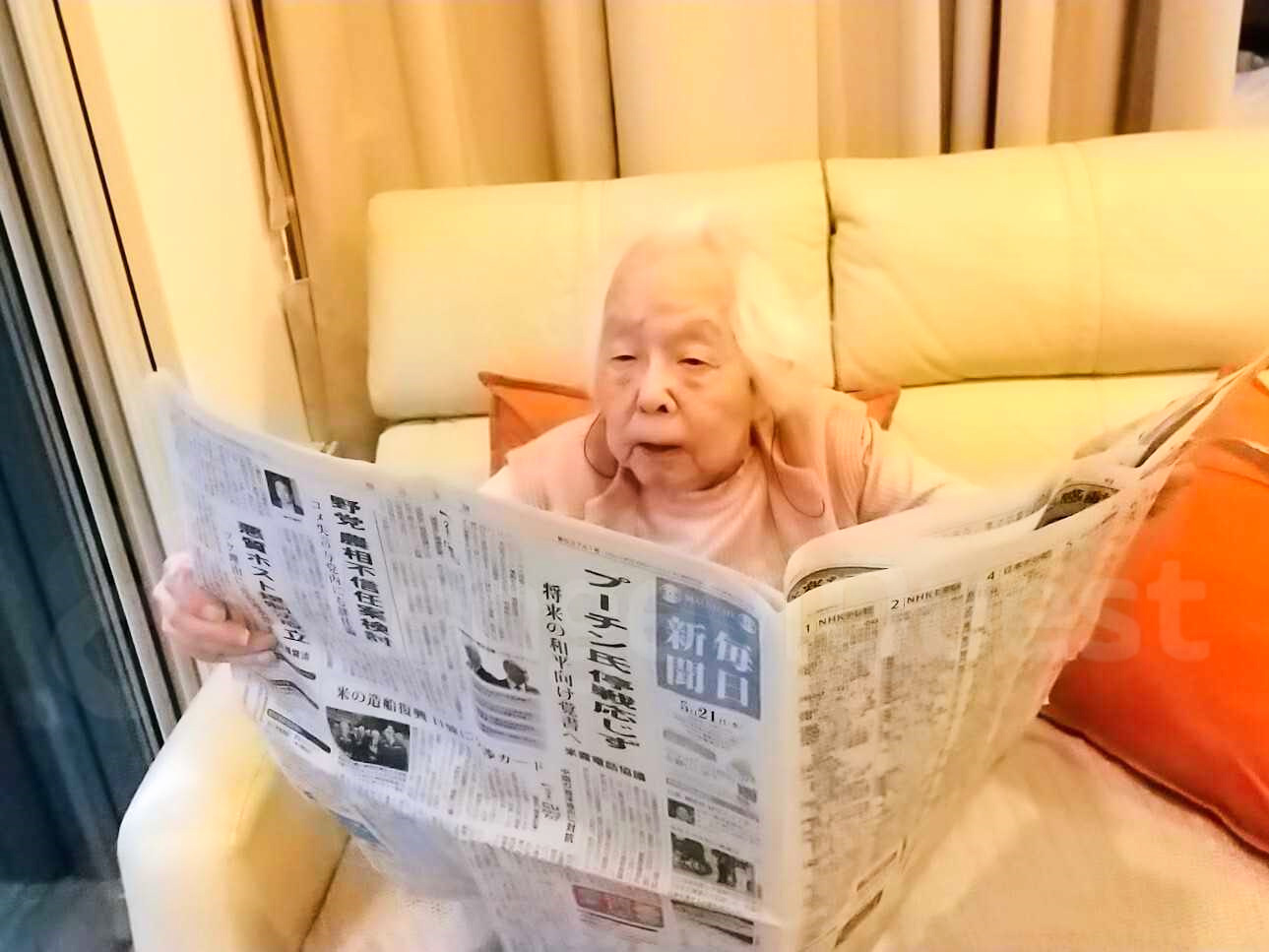
Tsuru Yamamoto reading in her living room, aged 111. Photographed in July 2026. (Photo courtesy of Tsuru Yamamoto’s family)
A Positive Way of Life
According to her family, Tsuru has always looked on the positive side of life. She does not speak ill of others, does not dwell on problems, and has always had a strong will.
Her family also describes her as someone who is willing to put advice into practice. If her rehabilitation therapist recommends a new exercise, she gives it a try, no matter how inconvenient it may be.
Her family also notes that she has never suffered from any major internal organ diseases.
Walking Again
Tsuru fractured her right femur at the age of 106 and her left femur at the age of 110. On both occasions, she underwent surgery and worked hard through rehabilitation.
Following her second fracture, she once again completed rehabilitation and returned home. At the age of 111, she is still able to stand and walk using a walker under her family’s supervision.
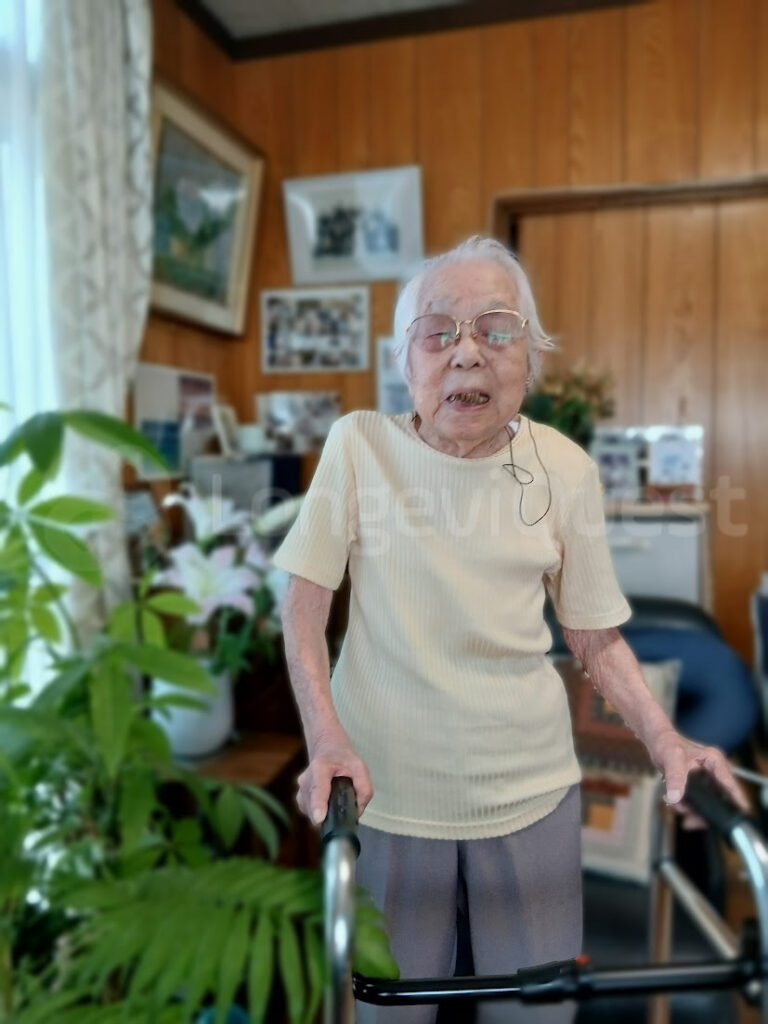
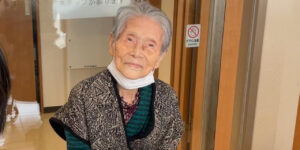
Tsuru Yamamoto walking with a walker, aged 111, in July 2026. (Photo courtesy of Tsuru Yamamoto’s family)
A Final Thought
Throughout our interview with Tsuru Yamamoto’s family, one theme emerged again and again: she remained open to trying new things throughout her life. This was reflected in the many hobbies she pursued, the friendships she formed, her travels, and the way she approached rehabilitation and put advice into practice. Even at the age of 111, she continues to read, work through rehabilitation, and enjoy watching Shohei Ohtani on television.
Everyone at LongeviQuest wishes Tsuru Yamamoto (山本つる) continued good health and happiness.
日本語訳を読む
111 歳の山本つるさん ― いつまでも新しいことに前向きな心
111 歳の山本つるさんは、現在、神奈川県大和市で娘さんと暮らしています。現在は神奈川県にお住まいですが、東京都大田区では最高齢の登録住民です。週2 回デイサービスに通い、週2 回訪問リハビリを受けながら、規則正しい毎日を過ごされています。洗濯物はご自身でたたみ、月刊誌や『万葉集』『古今和歌集』などの古典和歌集、書道の本を読んだり、テレビを見たりして過ごされています。
LongeviQuest は今回、ご家族への取材を通して、111 年にわたる山本さんの人生と、その歩みを彩ってきた数々の経験について伺いました。
関東大震災と第二次世界大戦を生き抜いて
山本つるさんは、1915 年3 月25 日、東京府東京市本所区(現在の東京都墨田区)に生まれました。お父様は浅草で映画館を営んでいました。
兄、姉、妹に囲まれて育ち、⾧寿の家系でもあります。妹の金森ウメ子さんは後に千葉県流山市の最高齢となり、107 歳まで⾧生きされました。1923 年9 月1 日に関東大震災が発
生したとき、つるさんは8 歳でした。自宅近くには旧陸軍被服廠があり、多くの人々が避難しました。しかし祖父は風向きを見て、千葉方面へ避難するよう家族に勧めます。その
判断が一家の命を救いました。被服廠跡地では巨大な火災旋風が発生し、およそ3 万8 千人が犠牲となったのです。
一家はしばらく千葉で過ごした後、東京へ戻りました。
小学校卒業後、大妻高等女学校(現・大妻中学高等学校)へ進学しました。在学中は運動神経の良さで知られ、体操やダンスの模範演技を任されました。そのことは、晩年になっても自慢の一つだったそうです。
小学生の頃、兄がキリスト教徒となり、毎週日曜日につるさんを教会へ連れて行くようになります。その後、ご自身も洗礼を受け、クリスチャンとなりました。後には妹とともに、教会が運営する保育園で働きました。
1945 年3 月10 日の東京大空襲後、つるさんは教会の仲間とともに、焼け野原となった本所で保育園や母子寮の支援にあたりました。焼け跡には数え切れないほどの焼死体があり、その光景を目の当たりにしました。その後、保育園で生き残った13 組の母子を小岩まで引率して避難させました。
小岩教会創立50 周年記念誌には、当時を振り返り、「神は耐えられない試練はお与えにならない」と感じたと綴っています。
いつまでも新しいことに挑戦する心
戦後、牧師の紹介で高校教師とお見合い結婚し、二人の息子さんと一人の娘さんを育てました。
家族の健康を願い、料理教室にも通いました。当時はまだ一般家庭では珍しかったグラタンなどの洋食を学び、家族に振る舞うことを楽しんでいました。
趣味は料理だけにとどまりません。自転車、水泳、洋裁、革細工、編み物、書道、そして俳画など、多彩な趣味を楽しみました。
ご主人の勧めで始めた書道は、生涯を通じた趣味となりました。腕前が上がると近所の子どもたちに教えるようになり、80 代まで書道教室を続けました。
90 代になっても電車で俳画教室へ通い続けました。教室には30 歳ほど年下の仲間も多く、一緒に昼食を楽しみ、旅行にも出掛けました。ご家族は、こうした若い世代との交流
が、若々しい気持ちを保つことにつながっていたのではないかと話しています。
旅行も大好きでした。70 代頃までは友人とヨーロッパ5~6 か国をはじめ、台湾や東南アジアも訪れました。
90 代で大腸がんと診断されましたが、手術翌日からリハビリを開始し、順調に回復しました。
ご家族の支えもあり、105 歳まで東京で自立した生活を続け、その後、大和市で娘さんとの同居を始めました。
俳画を通して被災地へ恩返し
2011 年の東日本大震災後、つるさんは被災した方々のために何かできないかと考えました。
翌年、ご自身の俳画作品を載せたカレンダー300 部を制作し、福島県須賀川市の被災者へ送りました。
8 歳で関東大震災を経験し、さらに東京大空襲後には須賀川へ疎開したご自身の体験を思い返し、大きな災害に見舞われた人々の力になりたいという思いがあったそうです。
毎日を楽しむ暮らし
現在は娘さん家族と大和市で暮らしています。週2 回デイサービスに通い、週2 回訪問リハビリを受けています。
洗濯物はご自身でたたみ、月刊誌や『万葉集』『古今和歌集』、書道の本を読んだり、テレビを見たりして日々を過ごされています。
好物はお寿司で、特にマグロのお刺身は週に2 回ほど召し上がります。うなぎの蒲焼きもお好きです。
ロサンゼルス・ドジャースの大谷翔平選手がテレビに映ると、「感じの良い青年ね」と笑顔で話されます。
毎年ご家族との温泉旅行も楽しみにしており、111 歳となった今年は箱根を訪れる予定です。
前向きな人生観
ご家族によると、つるさんは昔から何事も前向きに考える人でした。
人の悪口を言わず、悩みを引きずらず、意志の強い性格だったそうです。
また、人から勧められたことは素直に実践する人でもありました。リハビリの先生から新しい運動を勧められると、面倒に思えることでもまずはやってみる。その姿勢は今も変わりません。
さらに、ご家族によれば、大きな内臓疾患を患ったことは一度もないそうです。
再び歩けるように106 歳で右大腿骨を骨折し、110 歳では左大腿骨を骨折しました。
いずれも手術を受け、懸命にリハビリへ取り組みました。
2 度目の骨折後も再びリハビリを終えて自宅へ戻り、111 歳となった現在も、ご家族が見守る中で歩行器を使って立ち上がり、歩くことができます。
おわりに
ご家族への取材を通して、何度も感じたことがあります。それは、つるさんが生涯を通じて、新しいことに前向きな姿勢を貫いてこられたということです。数多くの趣味に取り組み、若い世代との交流を楽しみ、世界各地を旅し、リハビリにも前向きに取り組み、人からの助言も素直に受け入れてこられました。111 歳となった今も、その姿勢は変わることなく、読書を楽しみ、リハビリに励み、食事を楽しみながら毎日を過ごされています。
LongeviQuest 一同、山本つるさんのこれからのますますのご健康とご多幸を心よりお祈りしております。