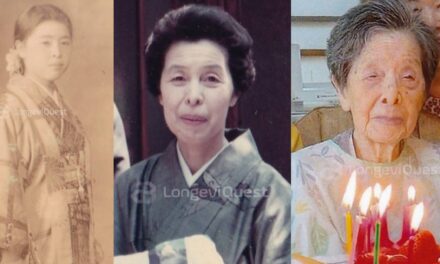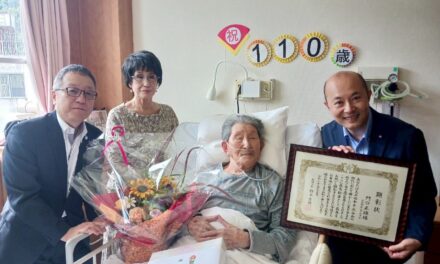
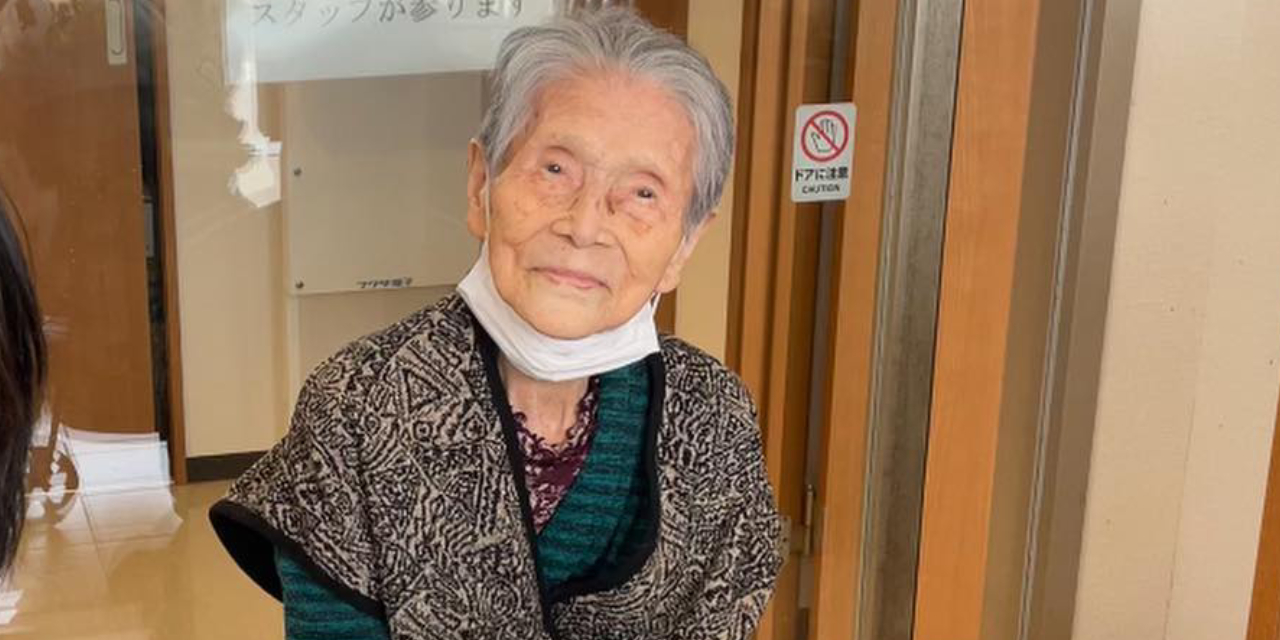
Setsu Sugahara (Japanese: 菅原節), 111, has become the oldest known living person in Kumamoto Prefecture following the death of Miho Matsuzaki (112) in Kumamoto City on 8 December.
Following this milestone, LongeviQuest had the opportunity to speak with Sugahara’s family, who kindly shared details about her life, daily habits, and current condition.
Early Years and Marriage
Sugahara was born in Sakata City, Yamagata Prefecture, on 22 March 1914. At the age of 17, she moved to Hokkaido, where her older brother was living, and through his introduction she married a man who worked for the Ministry of Communications. During the war, the family lived in Taipei. After the war, the family returned to Japan and resettled in Kumamoto, her husband’s hometown. After returning to Japan, her eldest daughter was born, and she was ultimately blessed with six children in total.
Walking as Part of Daily Life
While raising her children, Sugahara enjoyed shopping at department stores and wearing kimono. She often walked to do her shopping, even over relatively long distances. Her family believes that this habit of walking helped maintain her leg strength and overall physical fitness over many years.
Later Years and the 2016 Kumamoto Earthquakes
Sugahara lived with her fourth son’s family in Kumamoto City until the age of 102. In April 2016, she was affected by the magnitude 6.5 earthquakes that struck Kumamoto on 14 and 16 April (which forced more than 180,000 people to evacuate). After a brief period of evacuation at a nearby gymnasium, she moved to Ozu Town, where her youngest daughter lives.
Handcrafts and a Love of Reading
Sugahara was skilled with her hands. While living with her fourth son’s family, she enjoyed origami crafts, creating items such as swans and umbrellas. She also shared these skills by teaching them at a local seniors’ circle. In addition, she enjoyed reading, making books and literary magazines part of her daily routine. Continuing such fine handwork and mentally engaging activities in later life may have played a role in supporting her overall well-being.
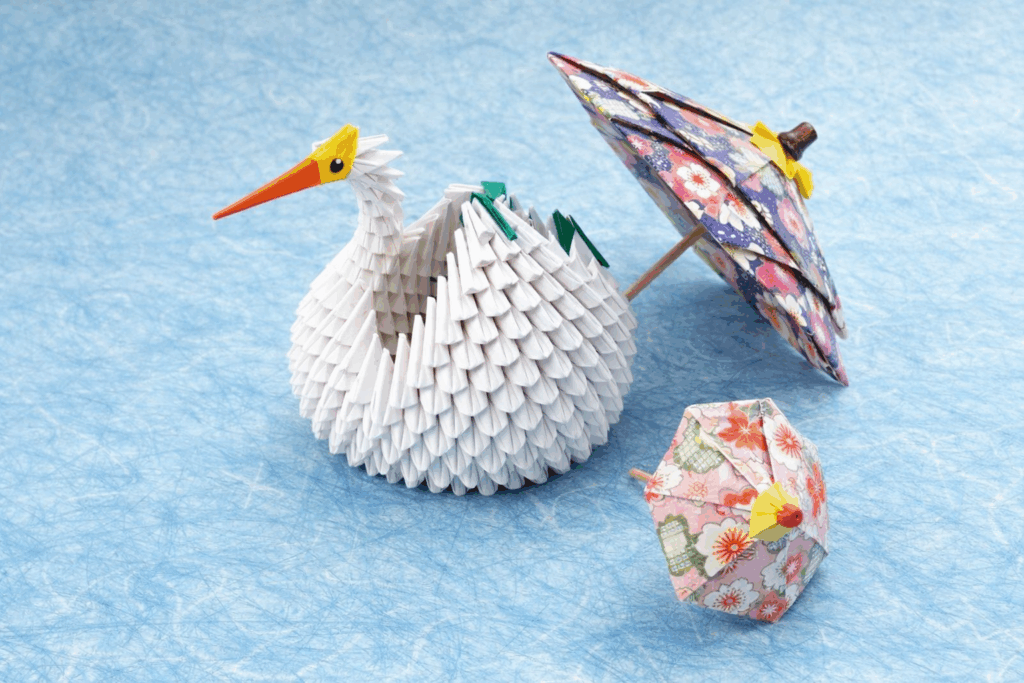
An image of origami handicrafts
Health and Current Condition
Throughout her life, Sugahara did not experience any serious illnesses or major injuries. Even after contracting COVID-19, she recovered quickly. In March 2025, shortly after her 111th birthday, she developed a fever, and doctors advised her family to prepare for the worst. However, she recovered within a week.
She was able to walk independently until reaching the age of 111, but after recovering from the fever, she gradually lost strength in her legs and now uses a wheelchair.
Life in a Nursing Home
Her family believes that her longevity is supported in large part by the nursing home where she has been cared for since the age of 102, as well as by the attentive support of the care staff. In many nursing homes in Japan, residents are often encouraged to use wheelchairs for safety once they enter care. At Sugahara’s nursing home, however, she was supported in continuing to walk as long as it was safely possible, allowing her to maintain independent walking ability until the age of 111.
At 111, she remains mentally alert and is able to eat meals on her own without assistance.
LongeviQuest thanks Sugahara’s family for sharing their time and information, and wishes her continued health and comfort.